ENGINEERING STUDIO FOR AI & SOFTWARE THAT SHIPS TO PRODUCTION
We build the other kind. AI is our sharpest specialization; engineering is our identity, and it is why the software we ship keeps working after the meeting ends, under real users, real load, and real costs. Two founders. No layers. You own everything we build.
The expensive part is not the demo.
A demo works because everything it needs is present. The person who built it is at the keyboard. The inputs are the friendly ones. There is one user, and the stakes are a round of applause.
Production is what happens when those things are absent. Users send input nobody imagined. A dependency fails on a Tuesday afternoon. Costs compound per request. Nobody is watching until something breaks in front of a customer.
Software fails this way all the time, and AI fails it hardest: built for the first condition, sold as if it were built for the second. That is the gap. Companies pay for it twice, once to build the demo, once to learn it cannot ship.
Codexyo exists for the second condition. The part after the applause. The part where it has to hold.
We are engineers first. Production AI is our specialization and our reputation. The software engineering underneath it is how that AI reaches production, and it is real depth, not a menu.
Intelligent Systems
Our specialization. AI built to a production standard instead of a demo: measured, monitored, cost-controlled, and engineered to hold under real users.
- LLM applications
- AI agents
- Computer vision
- Voice AI
- Applied ML & automation
Software Engineering
The systems intelligent features live inside, and the ones that never needed a model at all.
- Full-stack applications
- Backend platforms
- APIs & integrations
- Cloud architecture
- Data pipelines
Delivery & Scale
The unglamorous work that decides whether any of it survives production.
- DevOps & CI/CD
- Quality engineering
- Observability & monitoring
- Performance
- Maintenance & support
If your project also needs backend engineering, cloud infrastructure, integrations, QA, or embedded engineers alongside the AI, that is already how we deliver production systems. And if your problem does not need AI at all, we say so.
Production is a defined term here.
Everyone in this market says production-grade. We wrote down what we mean, published it, and invite you to hold us to any line of it.
The definition: a system is in production when it survives four absences.
The absence of its builders
An engineer who has never met us can operate, deploy, and change the system using only what we handed over. We test this before we leave. It is called the Stranger Test.
The absence of well-behaved input
Malformed, hostile, oversized, or strange input produces designed behavior. That includes input written specifically to manipulate a model.
The absence of the happy path
Every dependency has a plan for the day it fails. Every deployment has a rollback that has been exercised, not assumed. A backup that has never been restored is a hope.
The absence of attention
The system reports its own condition. Correctness, cost, drift, and failure reach a named human before they reach your customers.
The full document covers twelve principles, nine gates, and the scorecard every project is graded against before it ships. It governs every system we build, with or without a model inside it. It is versioned, public, and includes the arguments against itself.
"They shipped in six weeks what our last vendor couldn't scope in six months. Rare mix of research depth and delivery discipline."
 Daniel ReedCTO — SERIES B FINTECHSUPPORT AGENT SYSTEM · FOUNDER WORK, PRE-CODEXYO
The people you meet are the people who build.
Codexyo is two founders. There is no bench behind us, and that is the design: nobody to hand your project to, nobody junior executing senior promises, no account manager between you and the person writing the architecture.
Faisal Afzal

Runs the first conversations, the scoping, and the questions that decide whether a system should exist at all. Translates the business problem before any of it becomes architecture, and stays in the room until handover.
Amir Aijaz

Architects and builds every system we ship: backend platforms, full-stack applications, cloud infrastructure, and the testing discipline underneath them, with AI systems (LLMs, agents, computer vision, voice) as the sharpest specialization on top. If Codexyo built it, Amir built it.
You meet both of us on the first call. You are still talking to both of us in the last week of the engagement.
Look us up before you contact us. We prefer clients who check.
The work, with the numbers attached
A short list, on purpose. Every entry here is real and checkable: a public repository or a live product, not a screenshot of a private client system. Work the founders shipped before Codexyo existed is labeled that way.
 FOUNDER WORK · PRE-CODEXYO
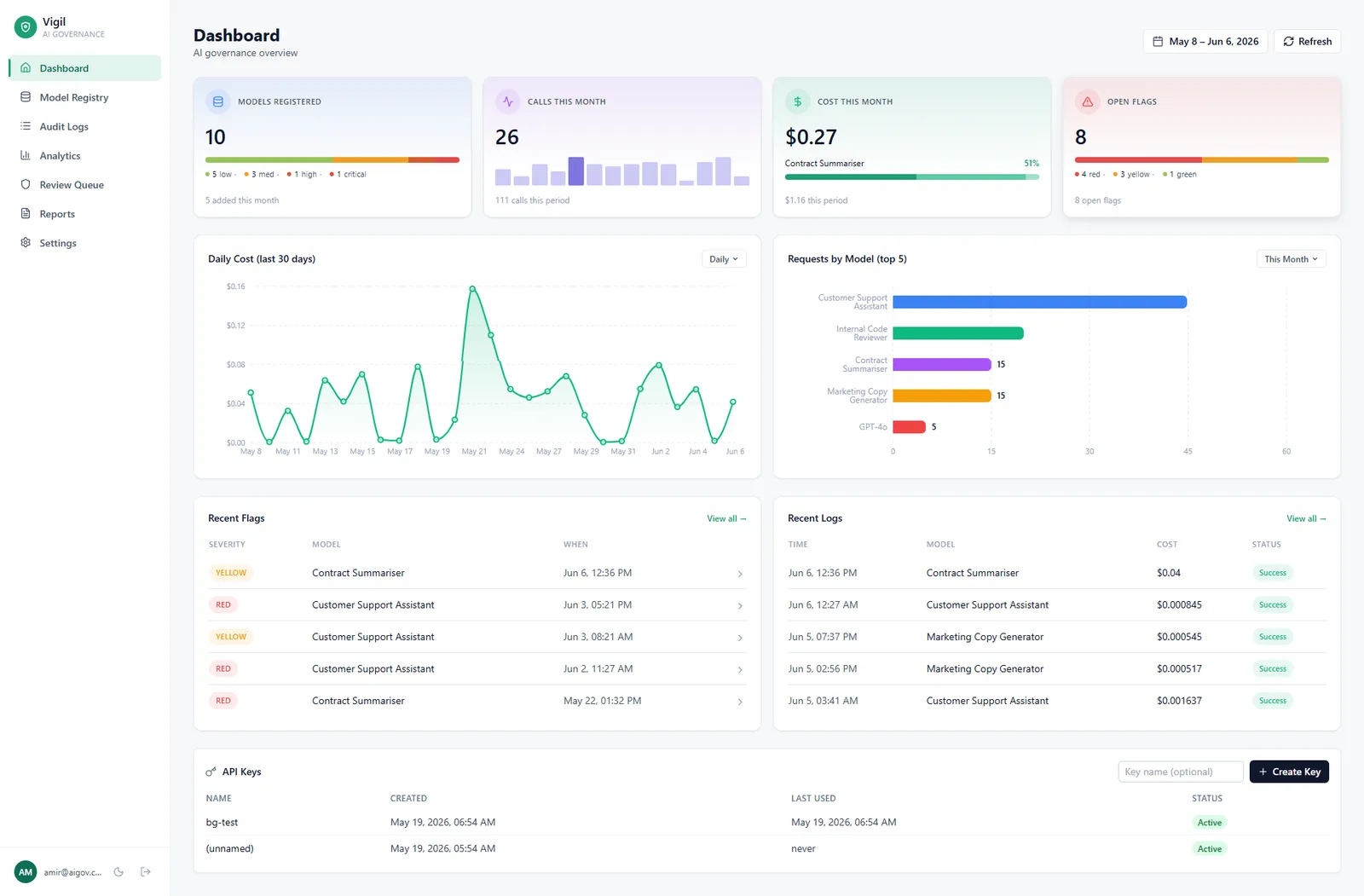
Vigil: AI Governance Dashboard
LLM observability and safety platform. A model registry with risk classification, audit logging, PII and toxicity detection, cost tracking across 250+ models, and NIST AI RMF compliance reports, with a published Python SDK.
- STACK
- FastAPI · React · PostgreSQL · Redis · Docker
- STATUS
- OPEN SOURCE · ON GITHUB
 FOUNDER WORK · PRE-CODEXYO
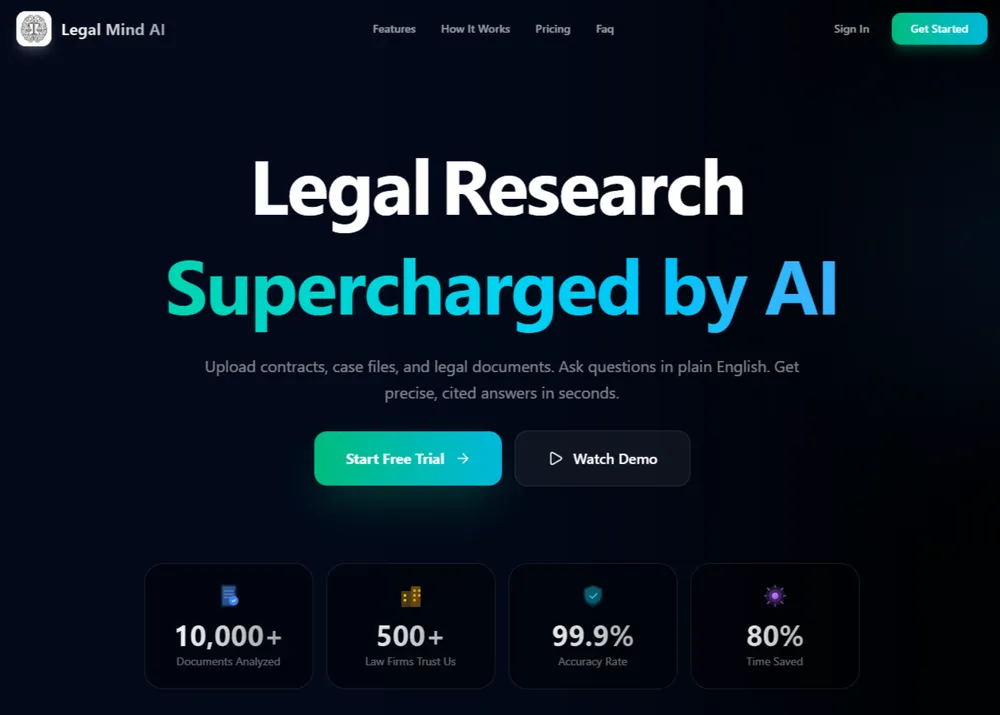
Legal Mind AI
A RAG system letting legal teams query large PDF documents in natural language, with every answer cited back to its source. Supports Gemini, OpenAI, and local Ollama backends.
- STACK
- LangChain · ChromaDB · FastAPI · React
- STATUS
- LIVE
 FOUNDER WORK · PRE-CODEXYO
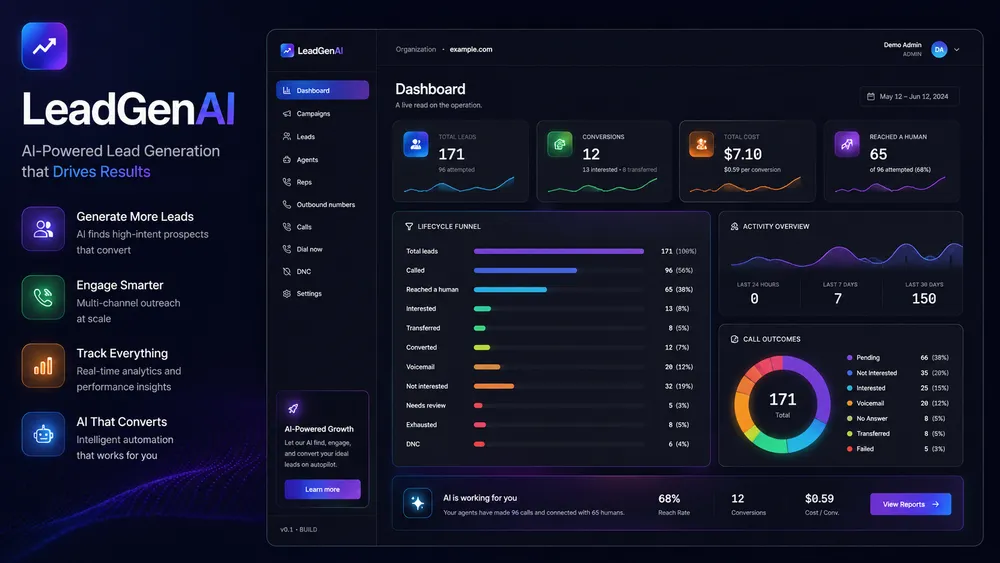
AI Voice Calling Agent
A production outbound and inbound voice agent for automated phone qualification and warm transfer. Multi-tenant, TCPA-compliant, with a concurrency-safe dispatcher, built for high call volume at low per-call cost.
- STACK
- Vapi · FastAPI · Celery · Next.js · Telephony
- STATUS
- PRODUCTION · MULTI-TENANT
Every case study is revisited annually. If a system is retired or a number changes, the write-up says so.
What our clients say.
The claims copilot paid for itself inside a quarter. Handle time fell 38% and our adjusters stopped drowning in PDFs.
71% of tickets resolve before a human sees them. CSAT went up, not down. We plan headcount differently now.
They told us plainly the feature we came in asking for wasn't worth building. That honesty is exactly why we came back for the next one.
The claims copilot paid for itself inside a quarter. Handle time fell 38% and our adjusters stopped drowning in PDFs.
71% of tickets resolve before a human sees them. CSAT went up, not down. We plan headcount differently now.
They told us plainly the feature we came in asking for wasn't worth building. That honesty is exactly why we came back for the next one.
22,000 documents a day, zero manual touch. The pipeline Codexyo built quietly became our operations backbone.
They shipped in six weeks what our last vendor couldn't scope in six months. A rare mix of research depth and delivery discipline.
The system has run in production untouched for months, and our own team operates it from the runbooks they left. That is the whole review.
22,000 documents a day, zero manual touch. The pipeline Codexyo built quietly became our operations backbone.
They shipped in six weeks what our last vendor couldn't scope in six months. A rare mix of research depth and delivery discipline.
The system has run in production untouched for months, and our own team operates it from the runbooks they left. That is the whole review.
Built so you are never trapped. Including by us.
Outcome-first by default, flexible in execution. Own a deliverable end to end, start with an architecture review or technical advisory, or embed our engineers alongside your team when that serves the project best. Whatever the shape, the way we work is the same.
- Diagnosis before construction. The first conversation examines the problem, not the contract. Do not build this is a standing outcome. So is you do not need AI for this.
- Bounded scope, in writing. What we are building, what we are not building, what it costs, and what done means. Agreed before work starts. Changes are negotiated in the open, never absorbed silently.
- Working software, weekly. Progress is the system running in front of you. If a week produced nothing you can see, we say that, and why.
- Your name on everything. Repositories in your organization. Infrastructure in your accounts. Credentials in your control. There is no moment in the engagement when you do not own your system.
- Handover is scheduled, not hoped for. Documentation, runbooks, recorded knowledge transfer, and the Stranger Test: an engineer who has never met us operates the system using only what we left behind. We are easy to leave. That is why clients stay.
- The gates are visible. Before anything ships, it is graded against the Production Standard scorecard. You see the grades and the evidence. Production-ready arrives as a document, not an announcement.

Start with the Production Readiness Sprint
Ten working days. Fixed fee. One question answered with evidence: should this system be built, and what will it take?
You bring an idea, a stalled prototype, an architecture decision, or a system that worries you. In return you own six things outright: a written verdict, a production scorecard, an evaluation baseline, an architecture blueprint, a risk register, and a build plan any competent team can execute.
Thirty minutes. We check fit before taking payment. Some intake calls end with us telling you not to buy the sprint.
TERMS, STATED PLAINLY
- Fixed fee, agreed before you say yes. No hourly meter.
- The build that may follow is scoped and priced to your problem, not a rate card. If budget or timeline is a real constraint, tell us early and we will shape the work to fit it, or tell you honestly if we cannot.
- The Verdict contains no proposal from us. If you want us to bid on the build, that arrives afterward, as a separate document, only if you ask.
- We do not credit the sprint fee against a future build. The sprint is work, priced as work. Crediting it would make it a sales cost, and then you could not trust the Verdict.
- We run at most two sprints per month. Both founders work on every one. If we are full, you wait or we refer you. We do not stretch.
The questions you are already asking.
The questions you would ask if you were sitting across from us. Answered here so you do not have to.
What if your pricing doesn't fit our budget?
Don't let the budget stop the conversation.
Tell us what you're working with, and we'll help find the right path. That might mean reducing the scope, delivering in phases, or working alongside your team.
We're here to solve your problem, not sell the biggest project. If we can't deliver work we'd be proud to put our name on within your budget, we'll tell you honestly and recommend a better path.
Will our idea and data remain confidential?
Yes, by default. We are happy to sign your NDA before technical discussions, or a mutual one if both sides share proprietary information. Client code, credentials, datasets, and business information are treated as confidential from day one, and nothing appears in our case studies or writing without your explicit written permission. We do not need your project to be public to prove we built it.
Do you offer ongoing support?
Yes. Every engagement includes written support terms, response expectations, and escalation paths agreed before work begins. We do not promise coverage we cannot sustain, and we say so up front. But we support the systems we build, and if your operation needs specific coverage windows or a standing support arrangement, we structure that with you at the start rather than improvise it after launch. Every system also ships operable by your own team, so staying with us is a choice, never a dependency.
Are you the cheapest option?
No. If you're looking for the lowest bid, we're probably not the right fit. We believe the better comparison is the cost of a system that works, lasts, and your team can own. That's why we start with a fixed-price sprint. In ten days, you'll know whether we're the right partner before committing to a larger build.
Won't the sprint just conclude we should hire you?
Four mechanisms say otherwise. The Verdict contains no pitch. The Build Plan must be executable by any competent team, or it fails our own review. We do not credit the fee against a build. And we track our verdict distribution: if every sprint concluded build it, with us, the product would be broken, and our own success metrics say so in writing.
Who owns the code and intellectual property?
You do. Unless a different arrangement is agreed in writing before work begins, everything developed for your project belongs to you: source code, documentation, deployment assets, and deliverables. Repositories live in your organization from the first commit, so ownership is not a handover event. It is the default state.
Can you work with our internal team?
Yes. Most clients engage us to own a defined outcome, and that is the model we recommend when it fits. But we work alongside internal engineering teams too: as technical partners, as embedded engineers, or on an hourly basis when that genuinely serves the project. We recommend the engagement model that gives your system the best chance of holding in production, not the one that is easiest to sell.
You're a new company.
As a firm, yes. Founded in 2026. The work we point to is real and labeled with where it came from, including what the founders shipped before Codexyo existed. Our individual histories are public. Check them. The one thing we will never do is inflate the firm to look older or larger than it is.
Who should not hire you?
Anyone shopping for the lowest bid. Anyone who wants a demo for a board deck and does not care if it ships. Anyone offering equity instead of budget. If that is you, we part here as friends.
You're two people. What happens if one of you gets hit by a bus?
Every system we ship is built to survive our absence. Client-owned repositories, documentation, runbooks, and a handover tested against a stranger. That is Part 4 of the Production Standard, and it exists because we are two people. A firm our size cannot afford to make you dependent on us. So we engineered the opposite.
Ten days. One answer.
Yours either way.
If you have a system in mind, the Production Readiness Sprint answers whether to build it before you pay to build it. Fixed fee, six deliverables, and everything we produce belongs to you, whoever builds next. Even if the answer is do not build. Especially then.
Not ready to talk? Read the Production Standard or take the writing with you. Both do their job without us in the room.

Tell us what you're building.
The first conversation is thirty minutes, free, and diagnostic. Bring a system in mind, a prototype that stalled, or a problem you can't quite place yet. We reply within one business day.
- 01We read it ourselves. Both founders, no queue in between.
- 02If it's a fit, we book a thirty-minute call to understand the problem.
- 03If it isn't, we say so, and often point you somewhere better.
Prefer email? faisal@codexyo.com